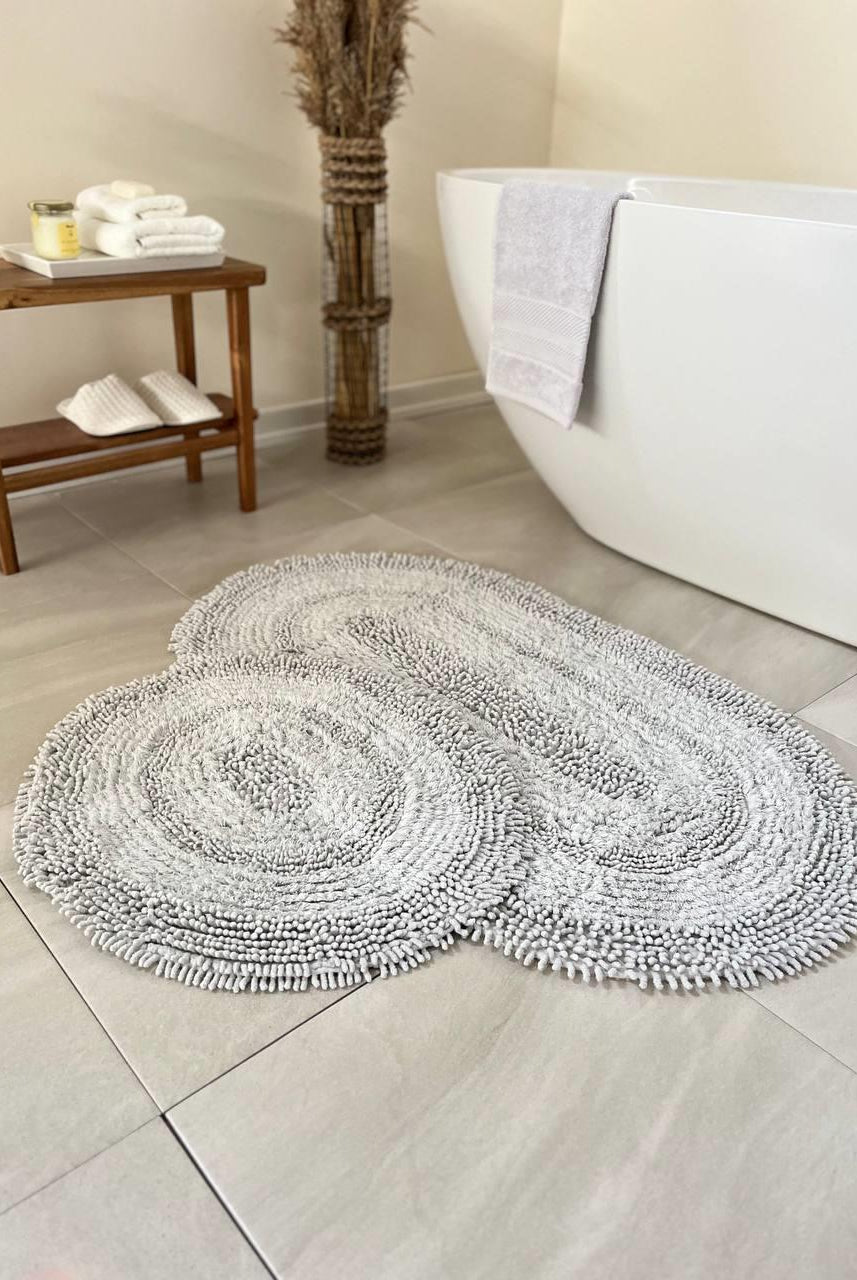
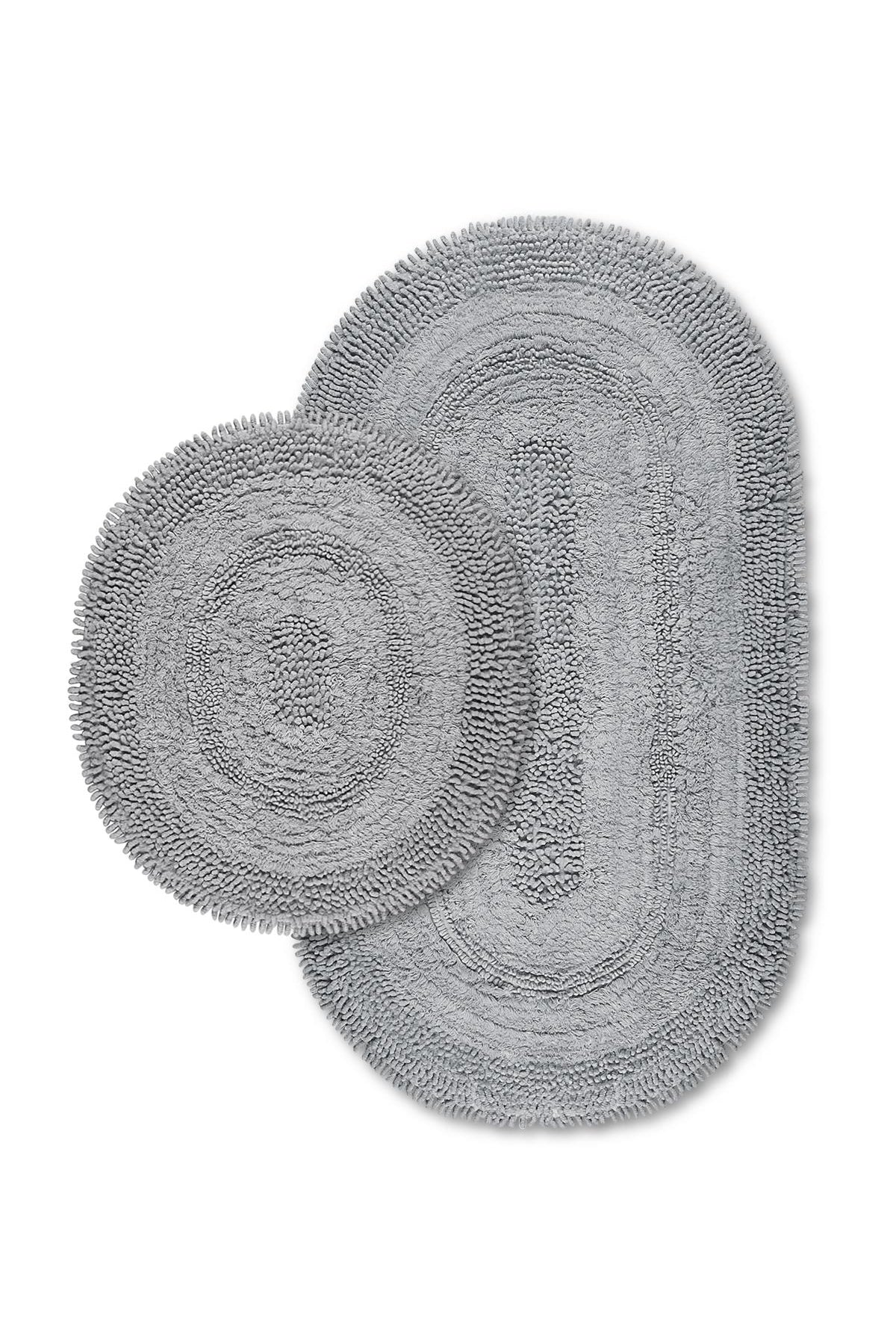
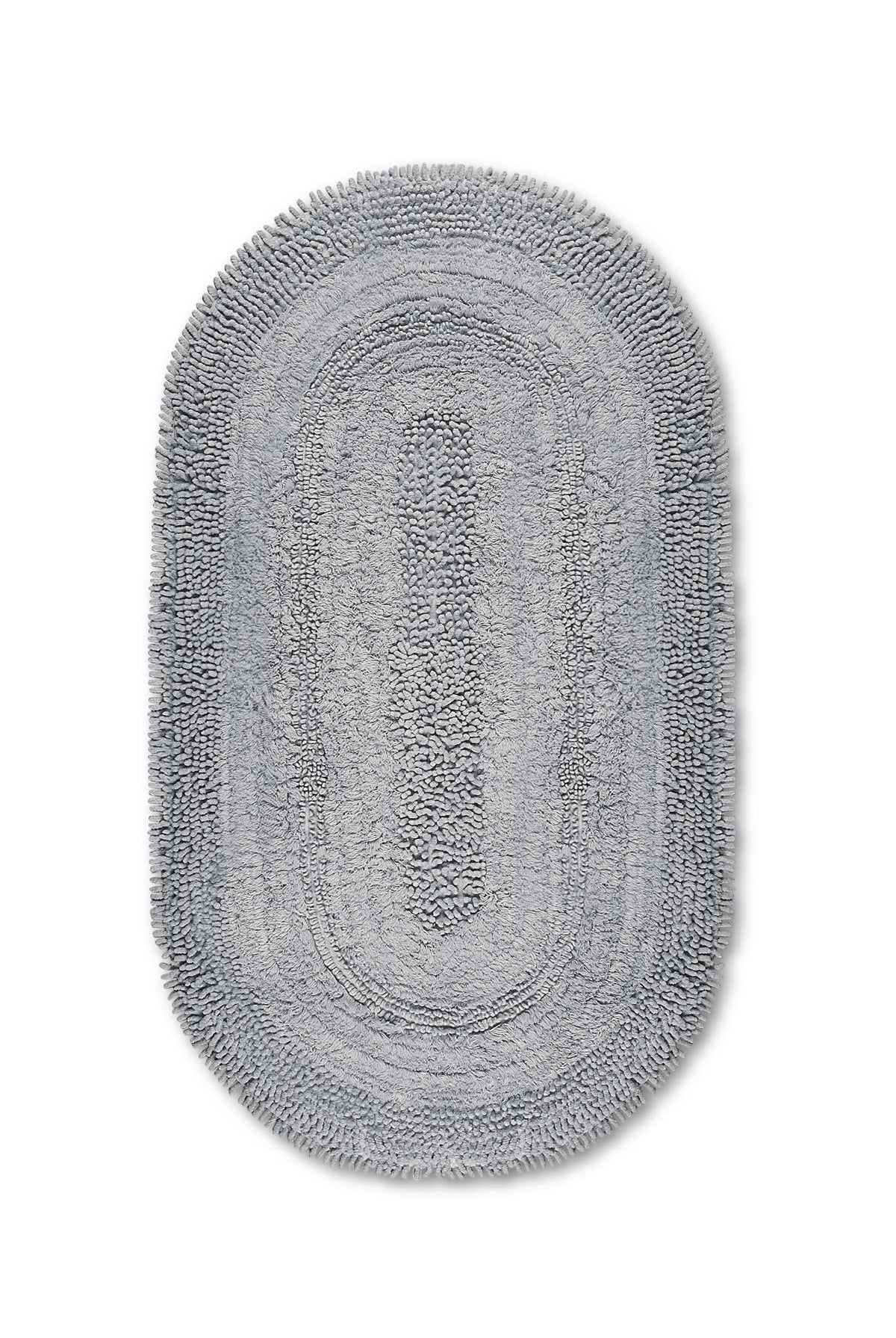
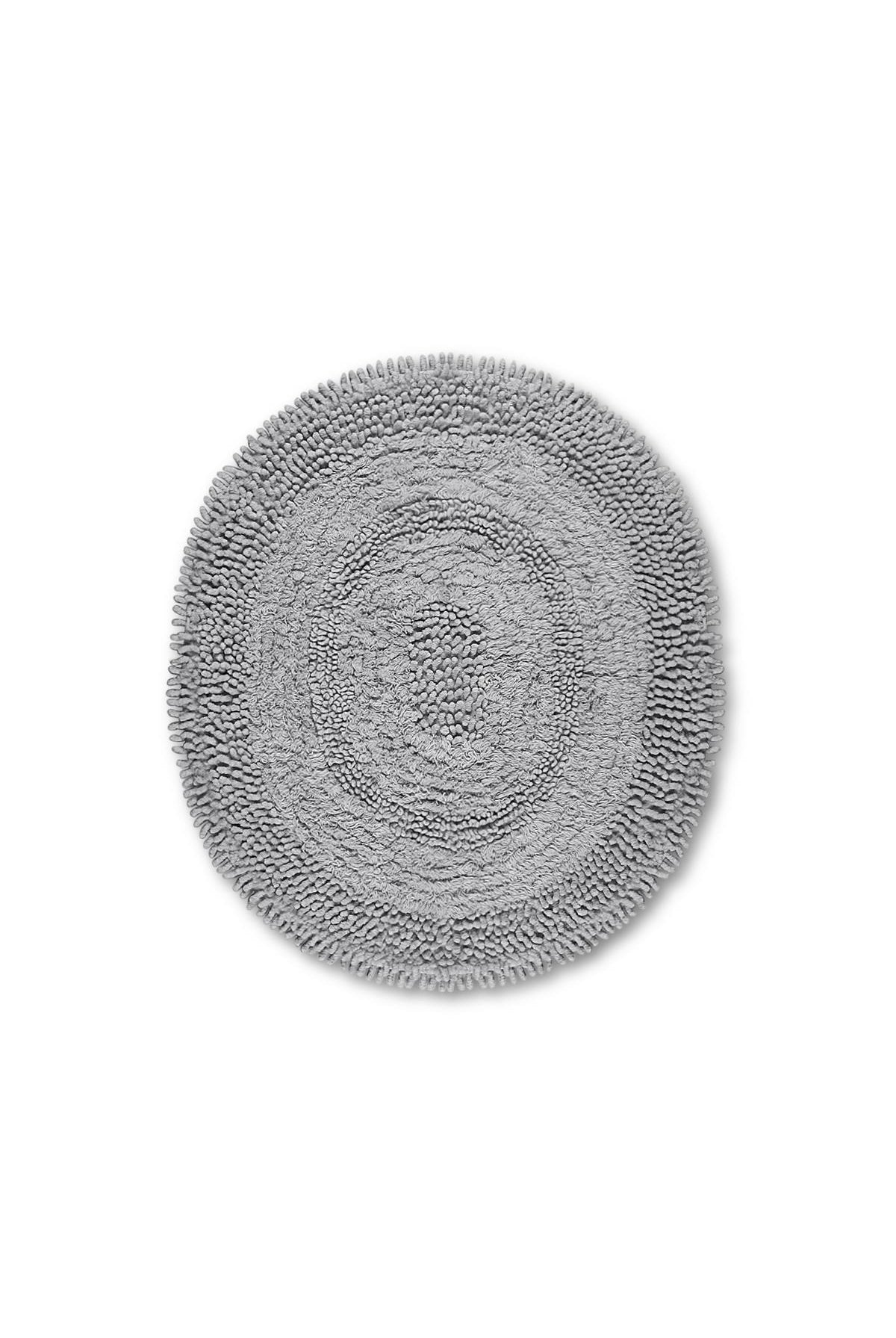
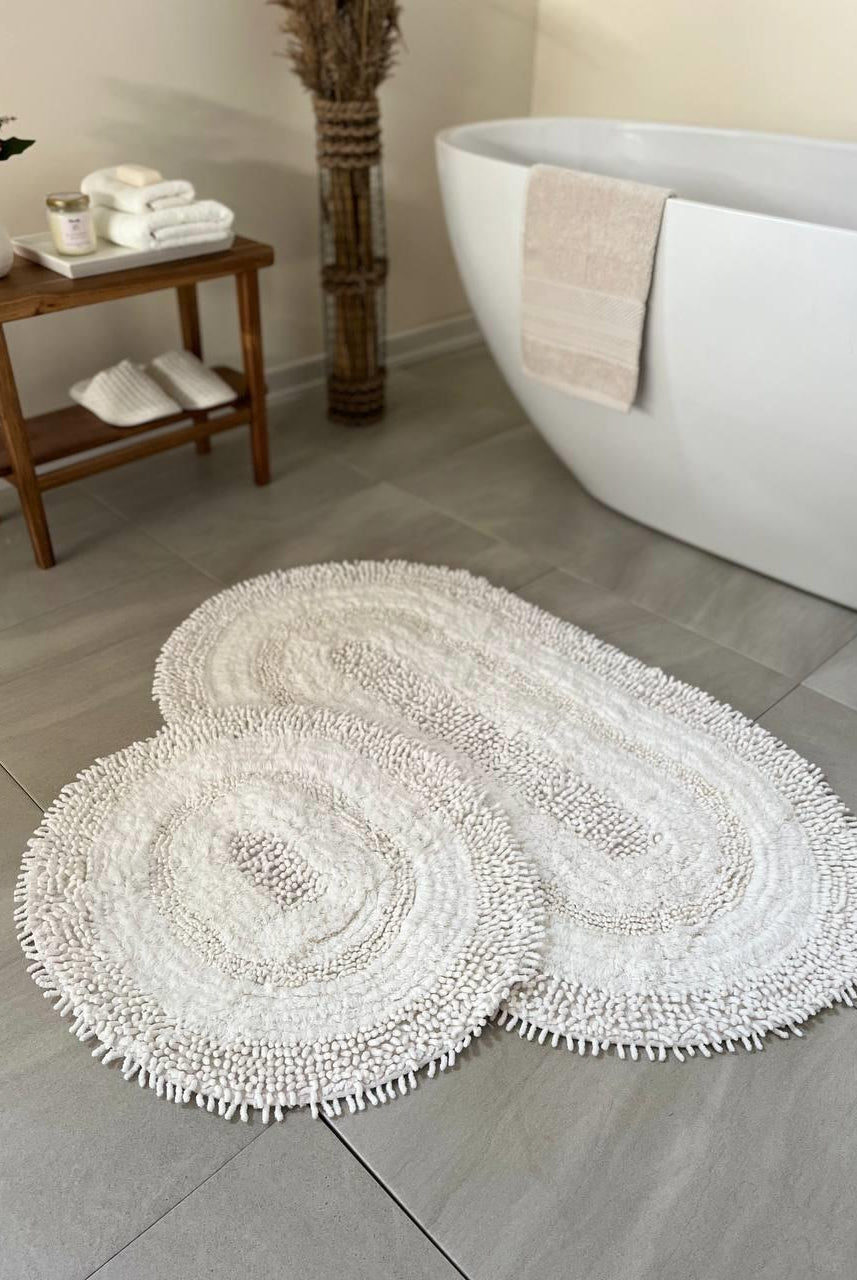
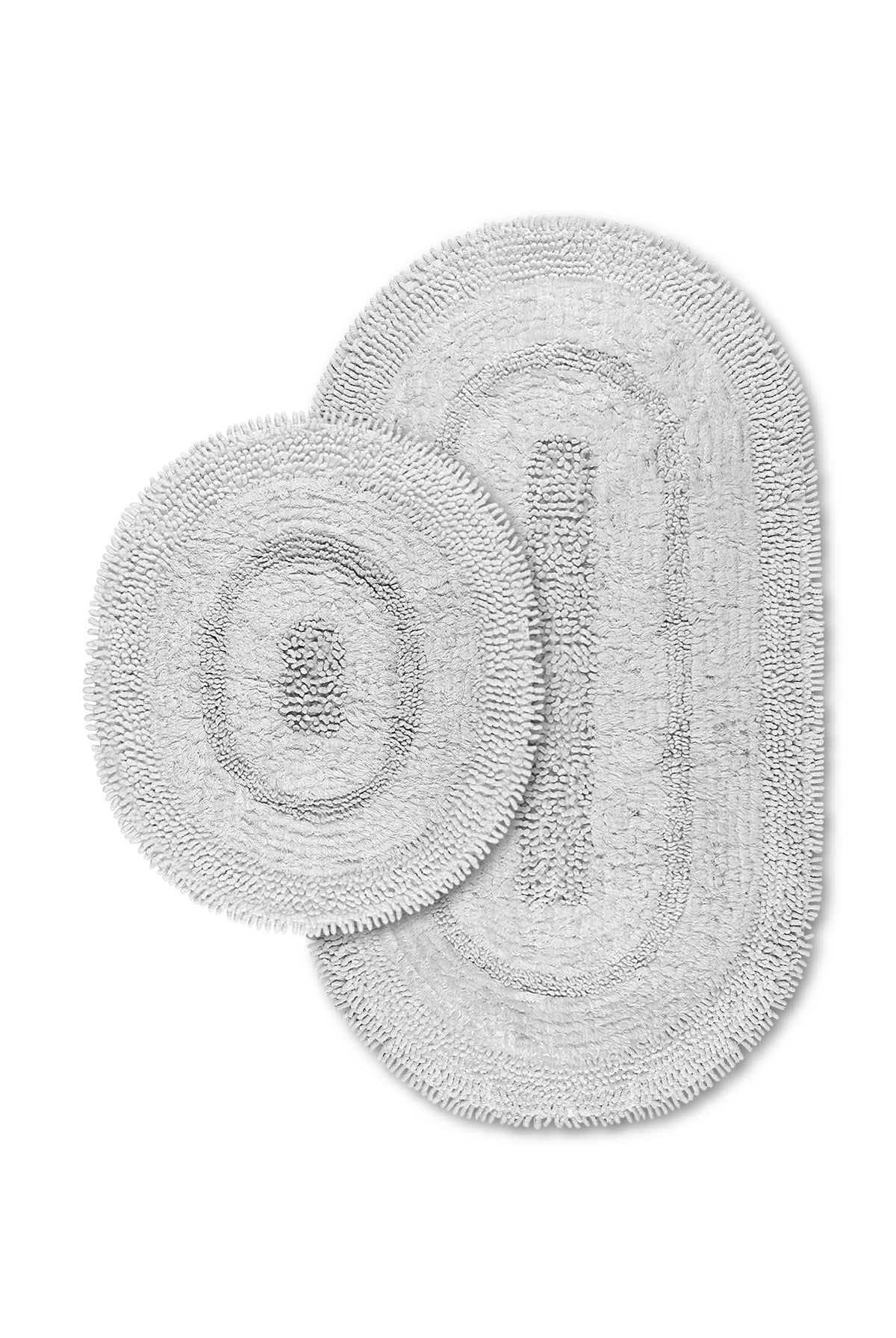
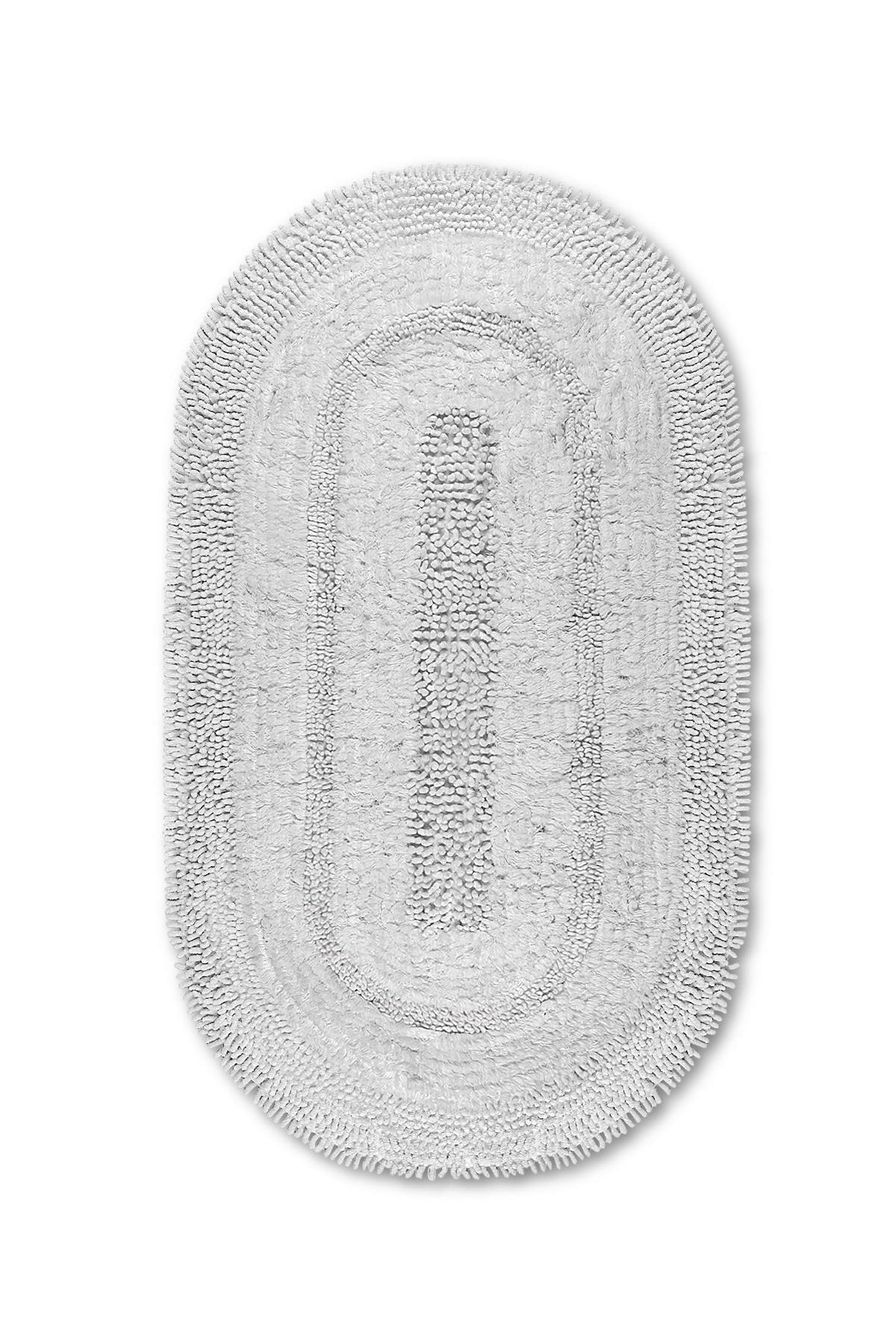
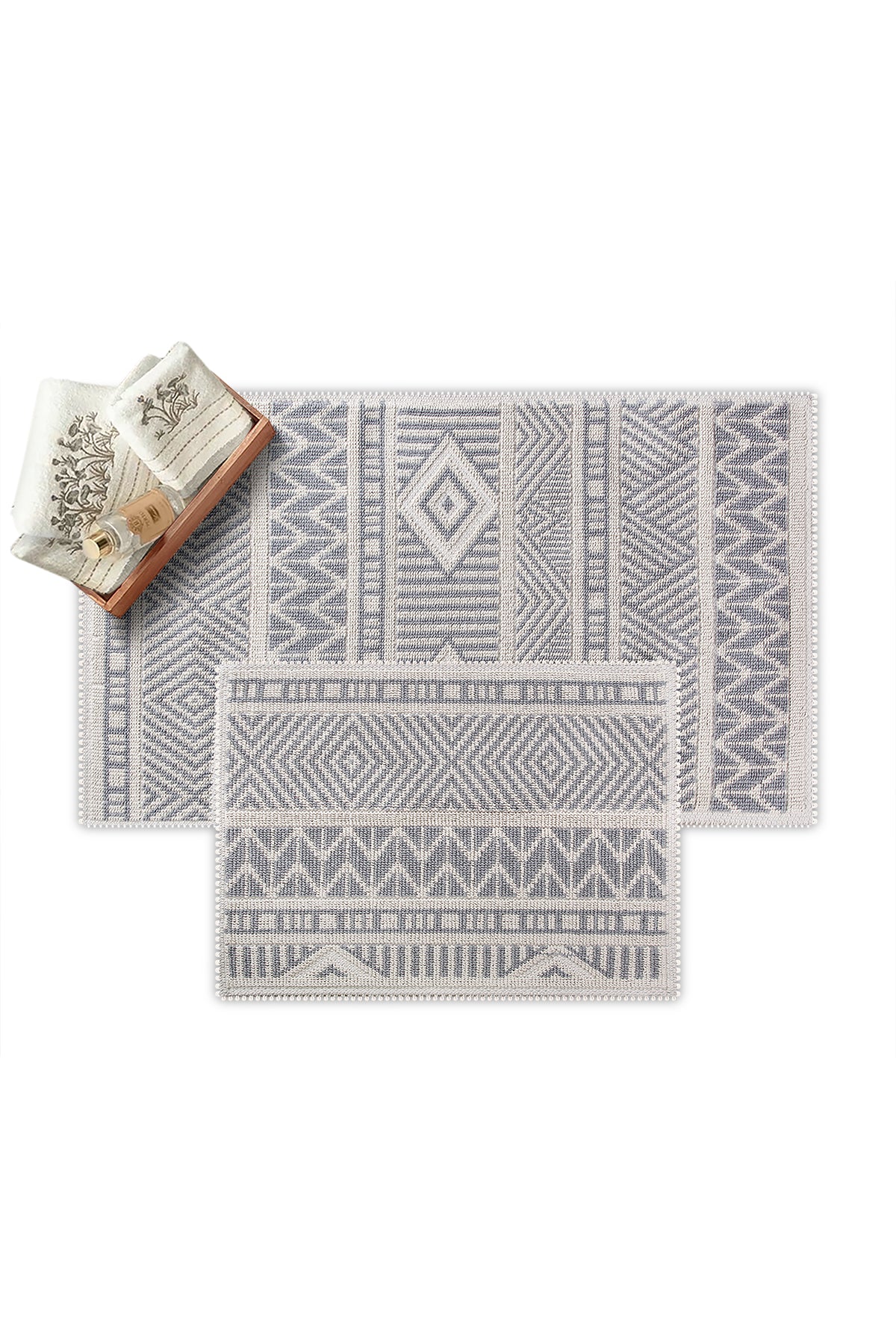
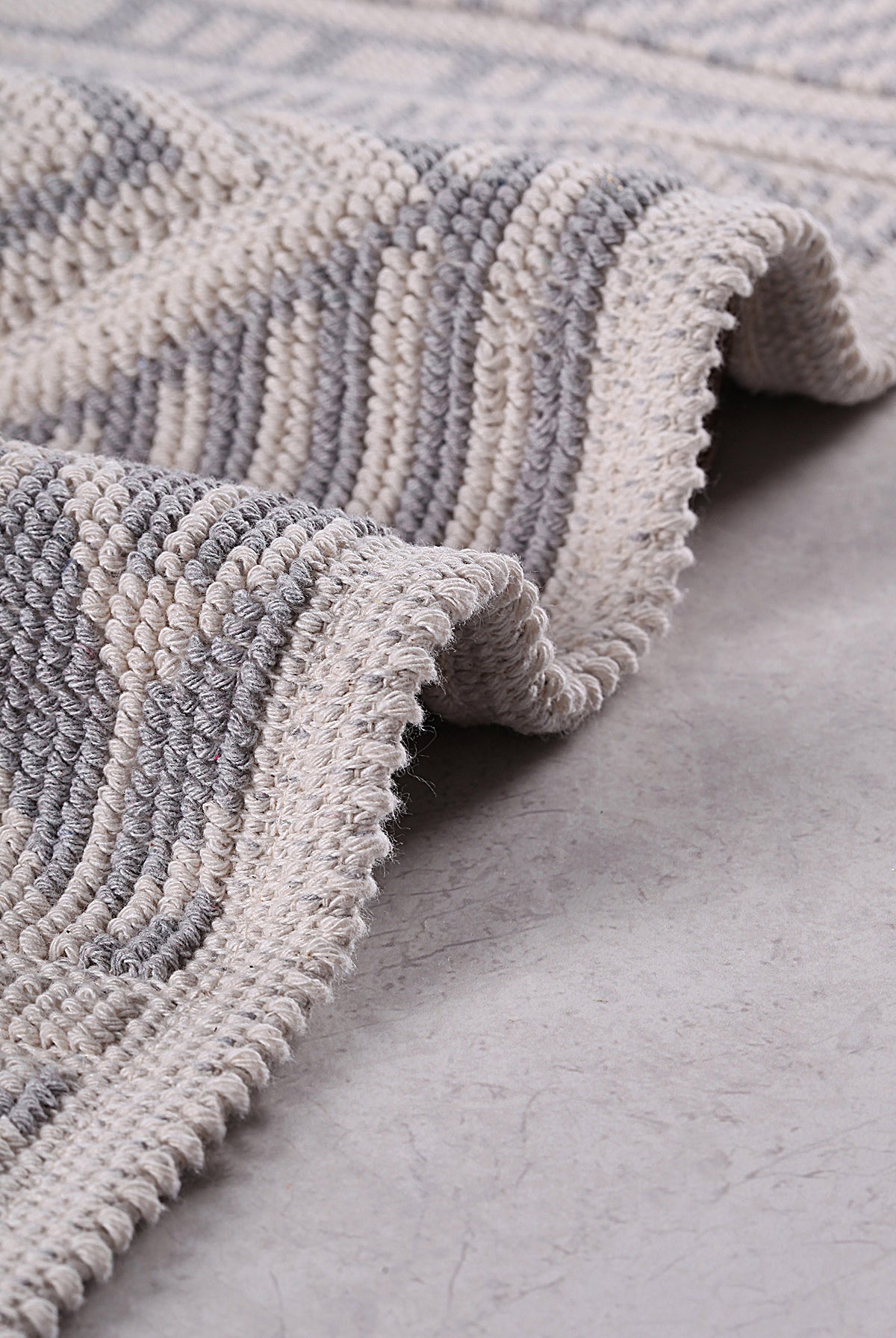
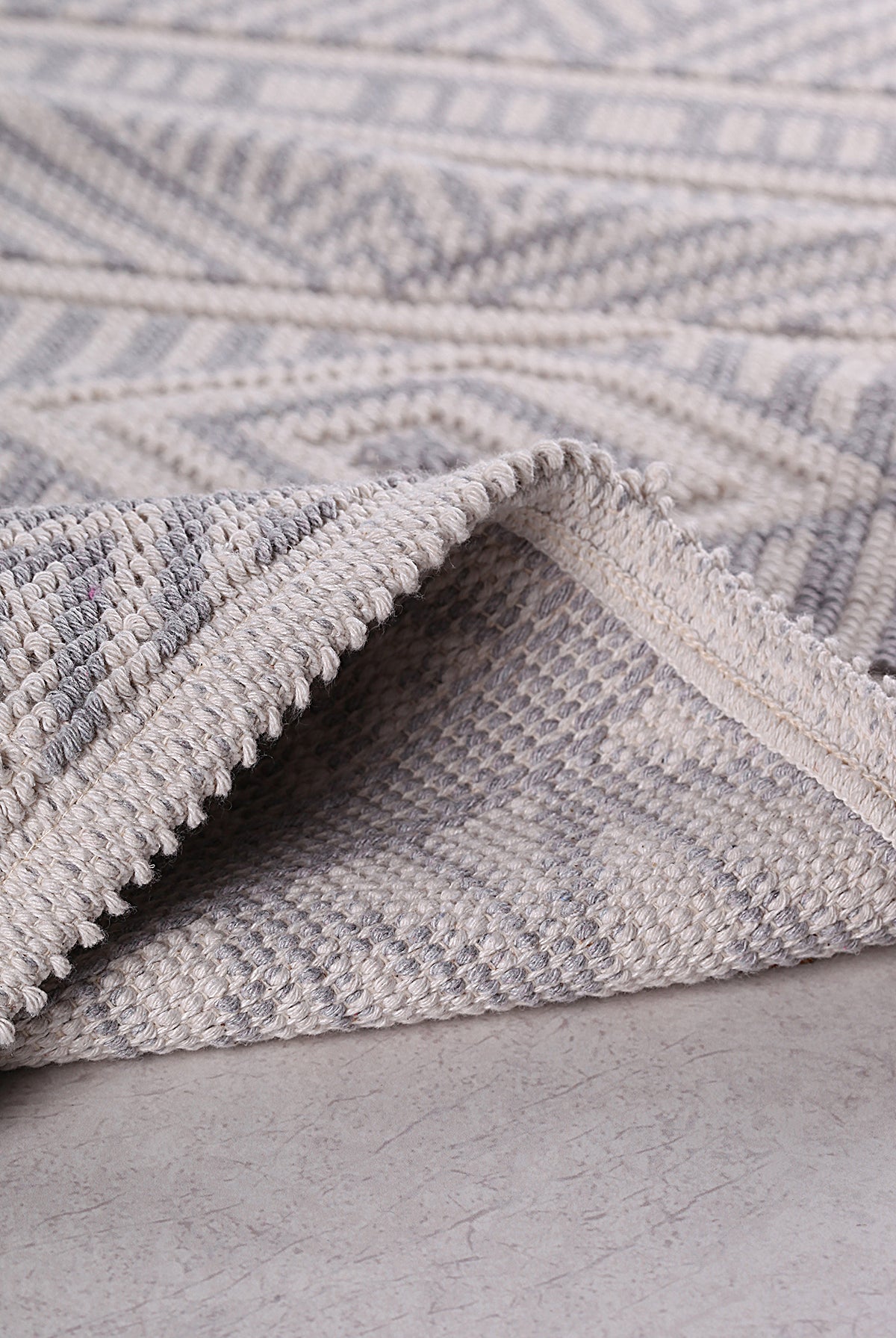
Every bath mat in the Bluenity collection is woven from 100% cotton. What makes the difference is how that single fibre is spun, woven and finished. In this guide you will find the material we actually use, our textures, and how to keep a mat looking as it did on day one for years.
Why cotton?
Which fabric a bath mat should be made of depends on what you expect from it. For us, the priorities are absorbing water quickly, feeling natural underfoot and standing up to frequent washing. That is why our whole collection is made of cotton.
- Absorbency: Cotton fibre draws water in, so the floor stays dry when you step out of the shower.
- Breathability: As a natural fibre it lets air through and dries after getting wet.
- Feel: It softens with every wash, without the slippery, plastic feel of synthetics.
- Durability: Washed correctly, it keeps its shape and texture for a long time.
Microfibre and polyester mats may dry faster and cost less, but they cannot match cotton for natural feel, breathability and lifespan. Cotton's one weakness is that thicker textures take a little longer to dry, so we recommend hanging your mat after use rather than leaving it on the floor.
Textures: one fibre, different characters
The series in our collection are made from the same cotton yarn with different weave structures. Texture determines how a mat feels underfoot, how it looks and how it should be cared for.
Loop and bouclé textures
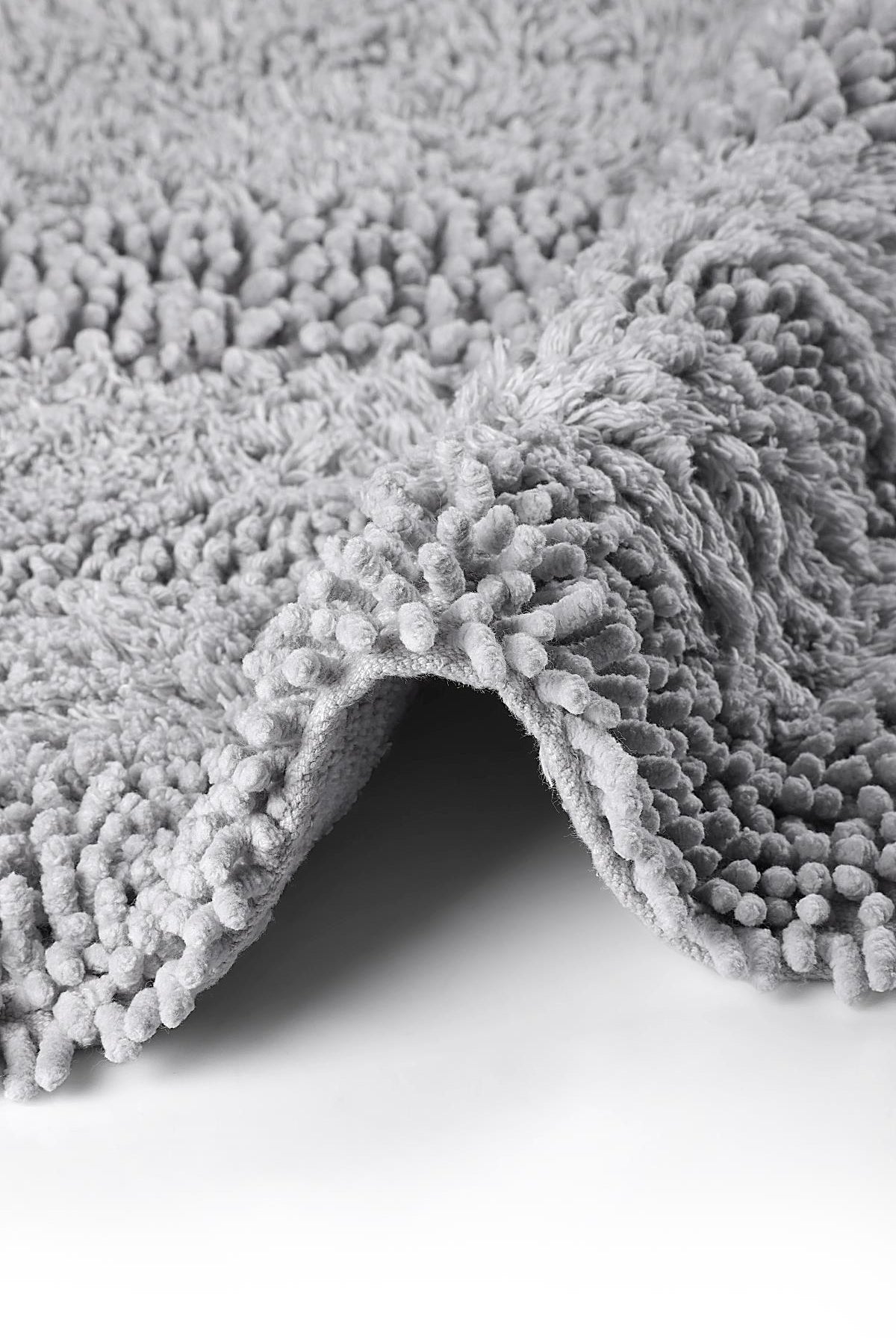
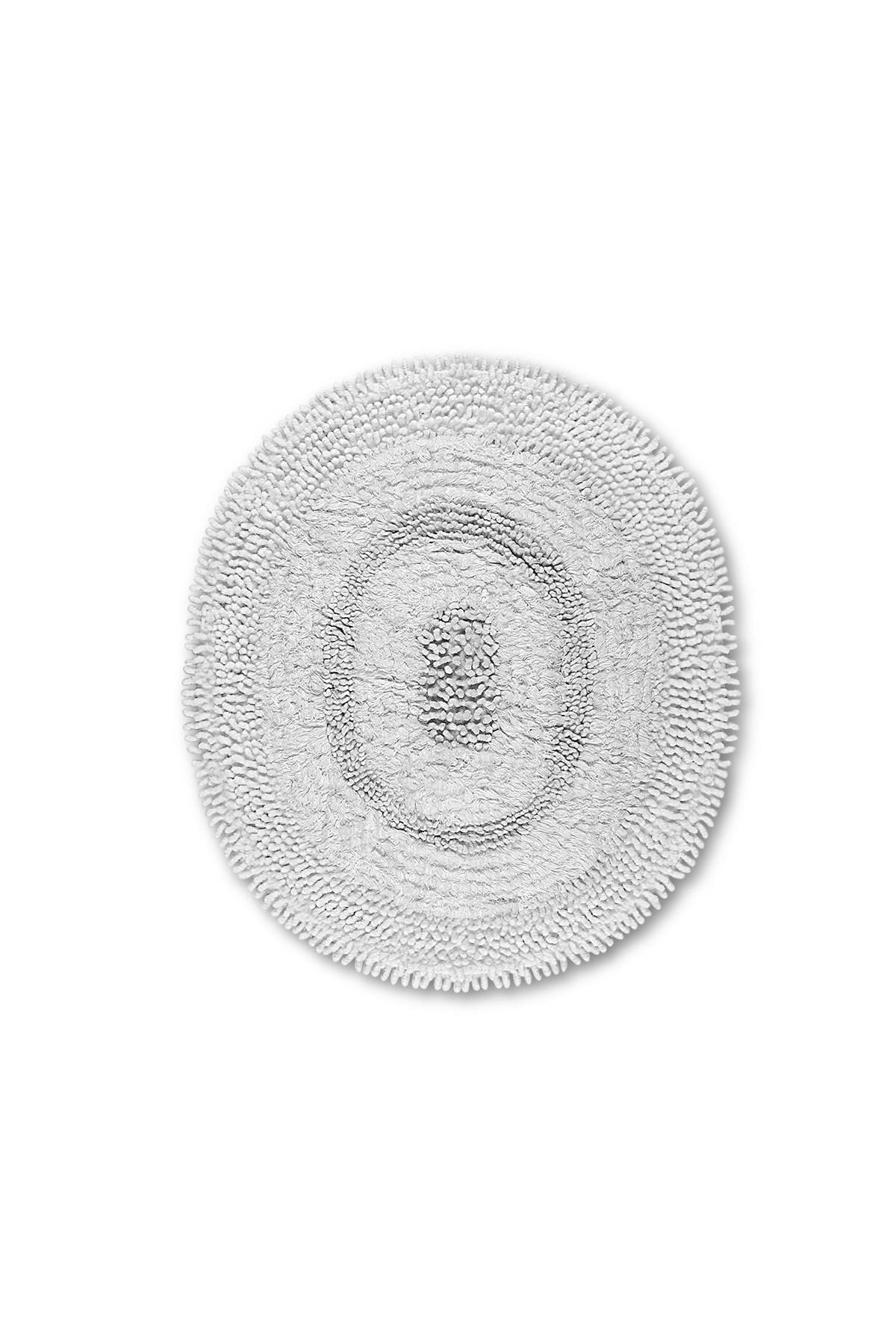
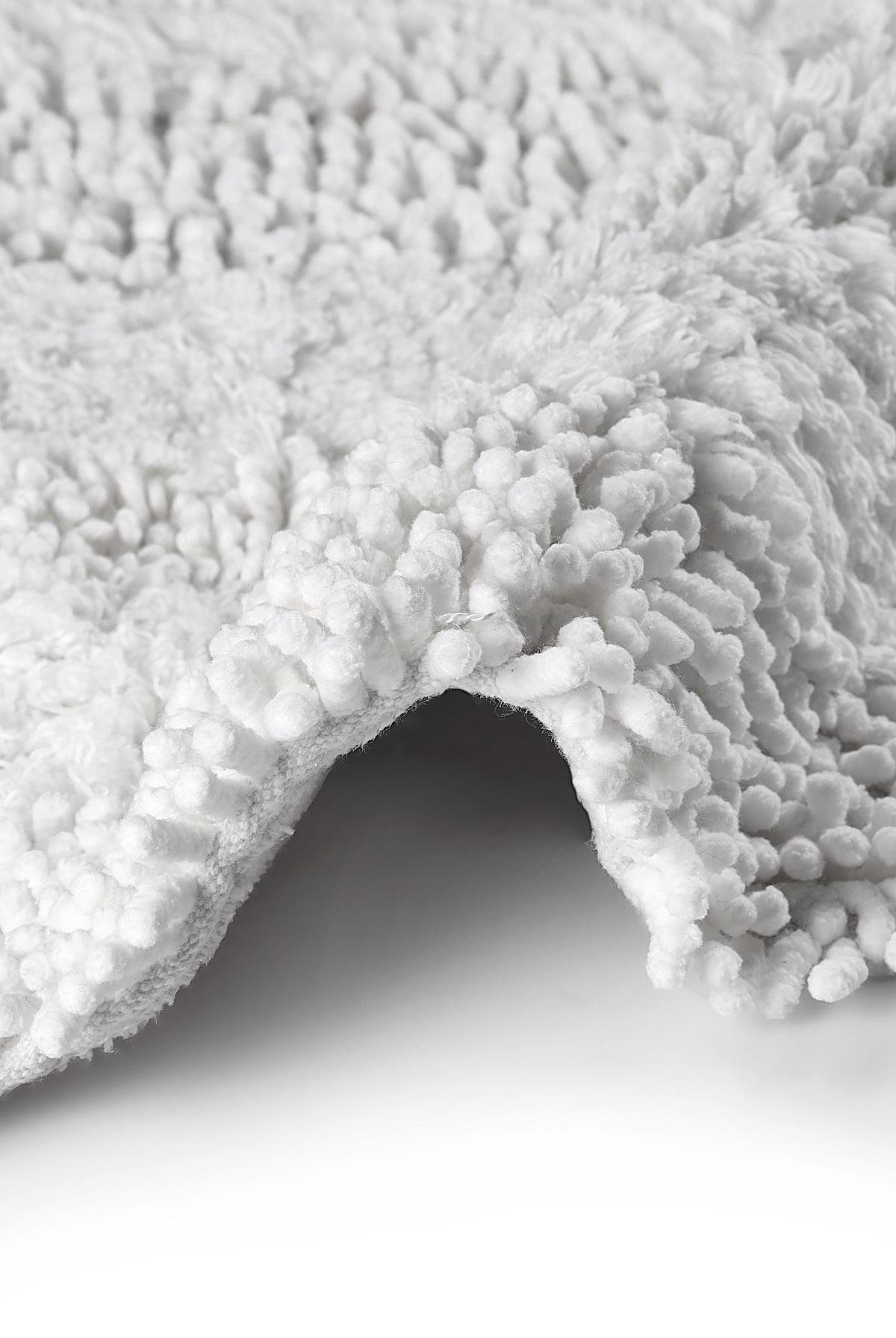
Dense loops create a plump, raised surface. Water is drawn in between the loops, and these are the softest textures underfoot. The Makaroni, Tapis Bukle and Marina series belong here.
Patterned weaves
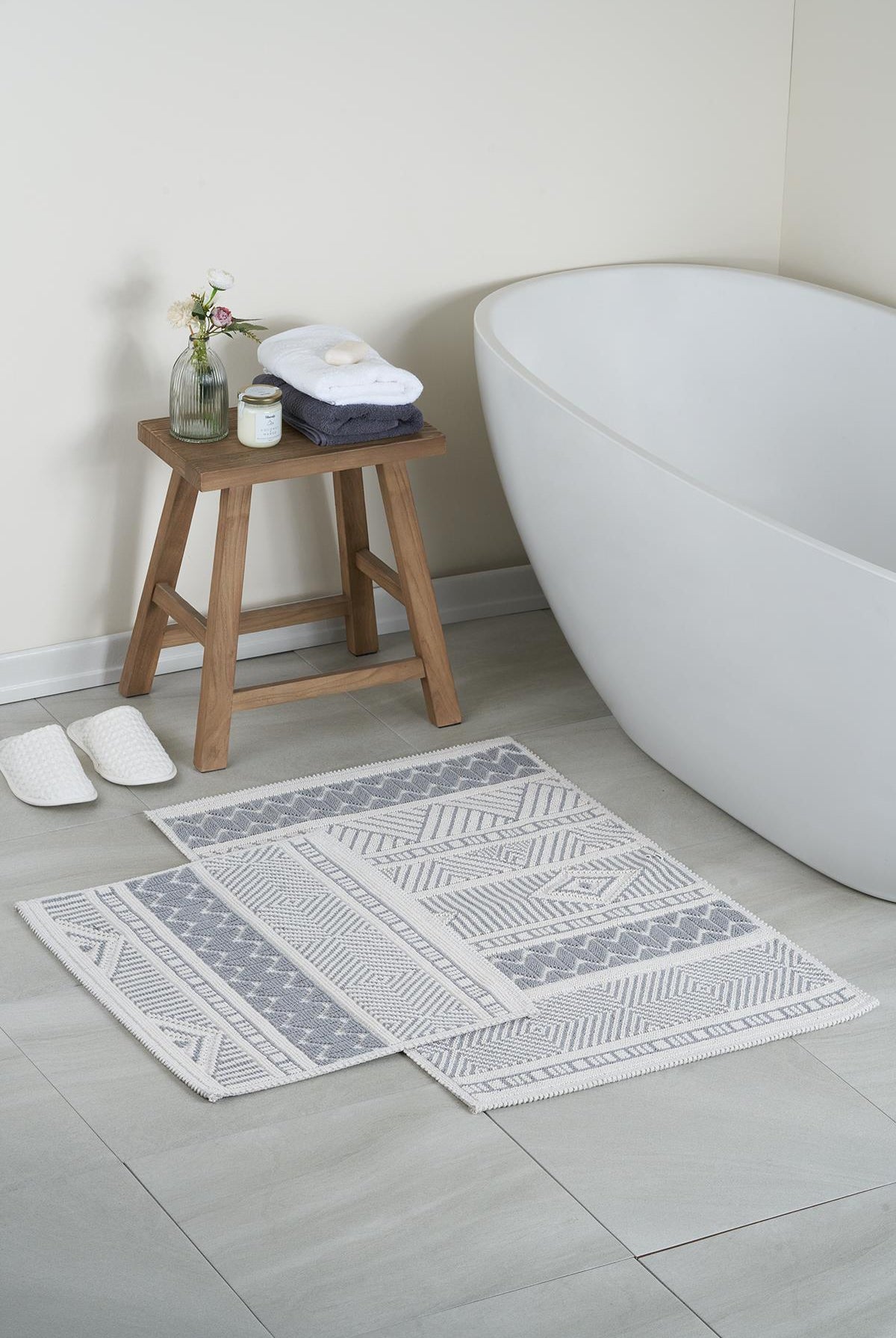
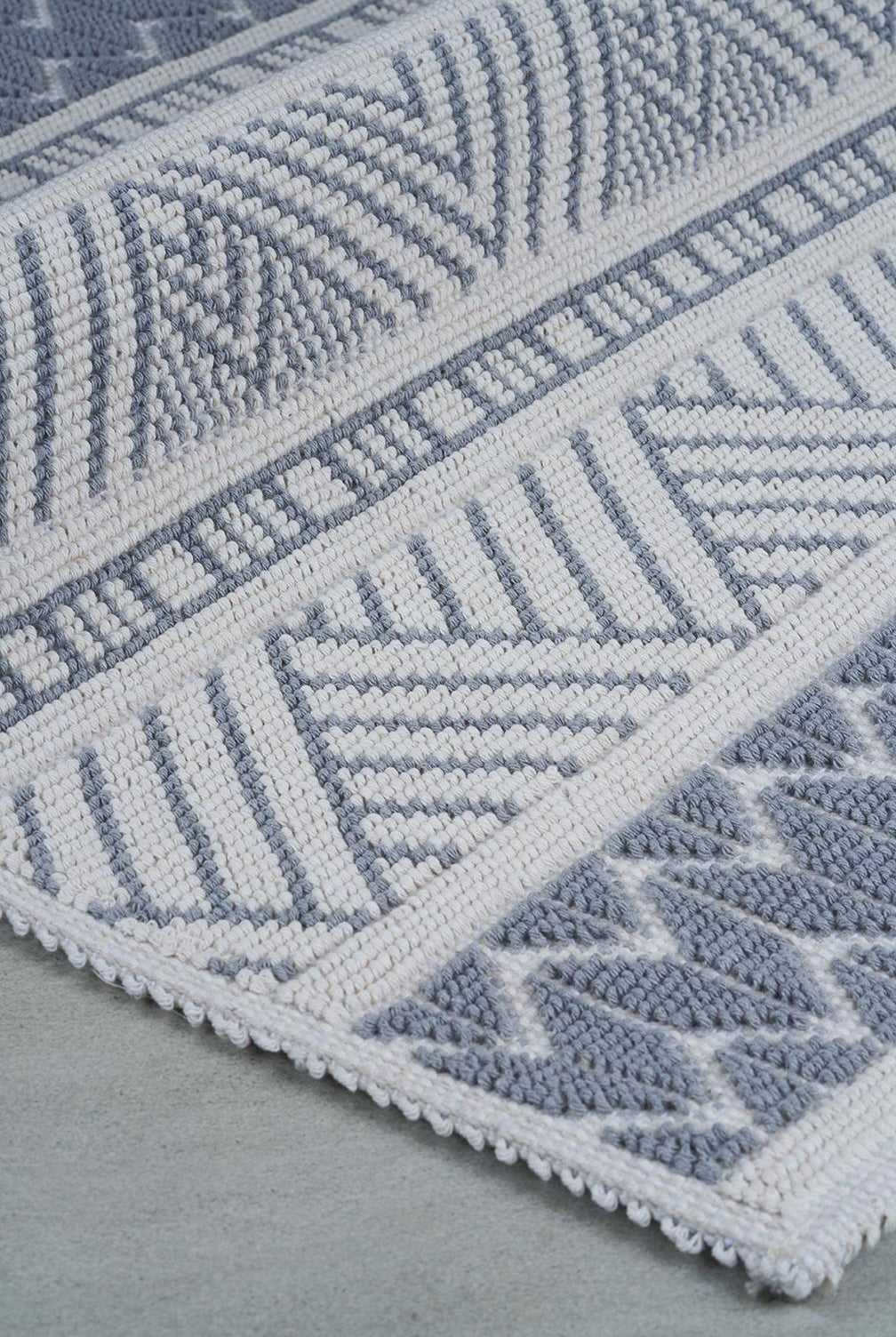
Grid and stripe patterns are created with yarn during weaving, not printed. The pattern does not fade in the wash; it is part of the mat itself. Basic Grid and Basic Stripe belong here.
Plain weaves
With their flat, balanced surfaces they suit any bathroom and are the easiest to care for. The Hat, Moana, Happy and Pacific series belong here.
To decide which texture suits your bathroom, see our texture guide.
Why weave quality shows
Two cotton mats can look alike at first glance. You see the difference after a few washes. The main factors that determine quality:
- Yarn: Evenly spun yarn does not shed and does not thin with washing.
- Density and weight: A densely woven mat with a high weight per square metre sits well on the floor, slips less and keeps its shape.
- Edge finishing: Firmly sewn edges stop the mat fraying or curling in the wash.
- Finishing: The treatments applied after weaving determine how soft the surface is and how it behaves in its first wash.
More on this: How to recognise weave quality
From yarn to your home
Bluenity mats are woven on our own looms at our sister company AMR Mensucat's factory in Hadımköy, Istanbul. The whole process happens under one roof:
- Yarn preparation, warping and bobbin winding
- Weaving
- Quality control
- Finishing
- Making up: cutting and edge sewing
- Second quality control
- Packing and shipping
Our production is OEKO-TEX certified, meaning the products are independently tested for substances harmful to human health. For details, visit our Production and Quality page.
Bath mat care
With the right care, a cotton bath mat keeps its texture for years. The short answer to how to wash a bath mat:
Washing
- Wash at 30°C on a delicate or cotton programme.
- Use a small amount of liquid or powder detergent.
- For the first washes, put the mat in a pillowcase or laundry bag so the filter does not clog. Looped mats may shed a little lint at first; this is normal.
- Wash dark and light colours separately.
Drying
- Do not tumble dry; high heat shrinks cotton and stiffens the texture.
- Dry flat or hanging, in an airy place out of direct sunlight.
- Shake the mat once dry; the loops lift and the texture comes back to life.
What to avoid
- Bleach: weakens the fibres and damages the colour.
- Fabric softener: coats the fibres and reduces absorbency.
- Ironing the front: if needed, iron only on the reverse at low heat.
Keeping shape and texture
- After use, hang the mat over the edge of the bath or on a rail to dry.
- In busy bathrooms, washing once a week is ideal; see how often to wash a bath mat.
- Rotating two sets extends the life of both.
Step-by-step washing guide: How to wash a bath mat

Craft in every weave.
Every stage, from yarn to packing, is carried out by our own team at our factory in Hadımköy. That is how we deliver the same quality in every batch.